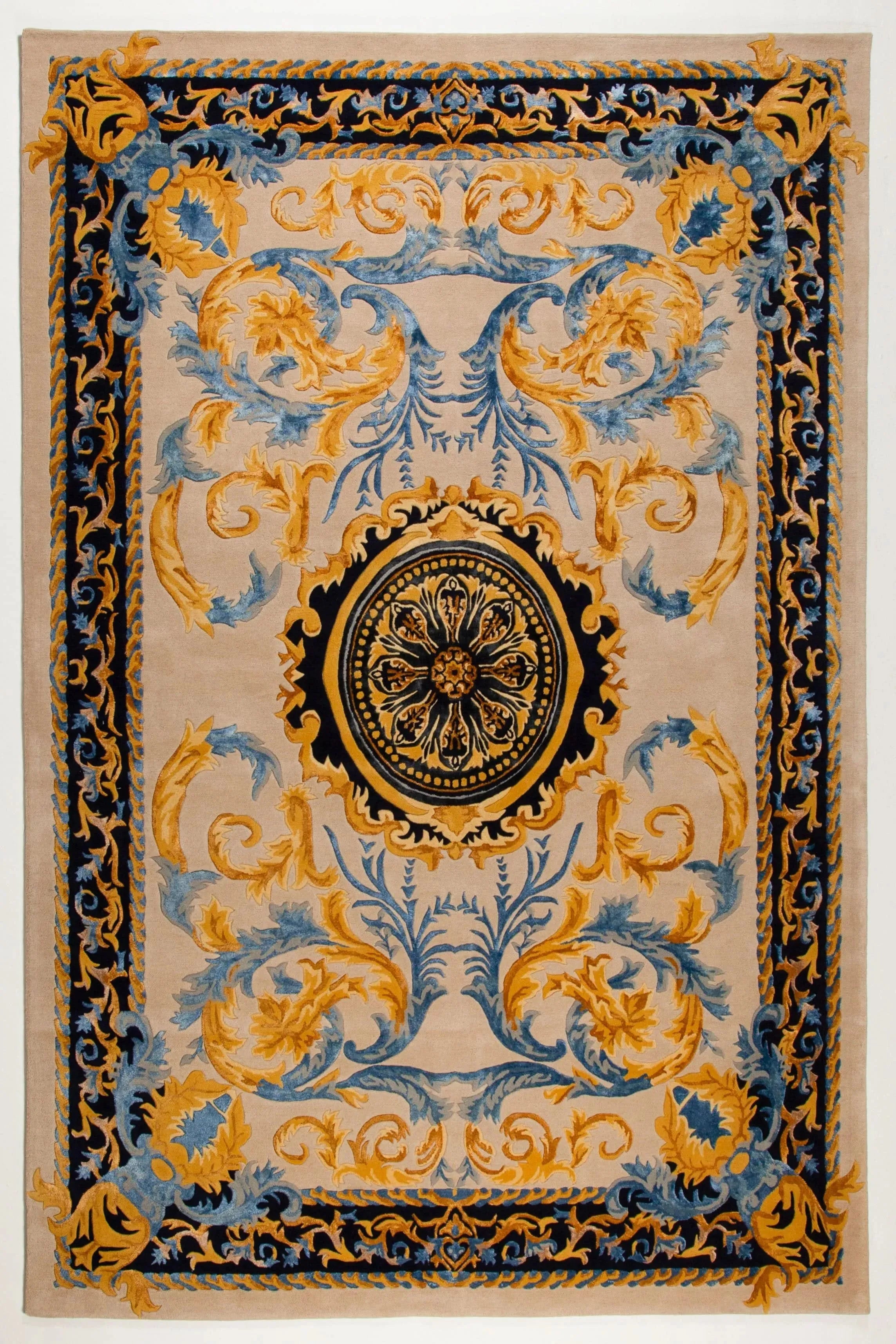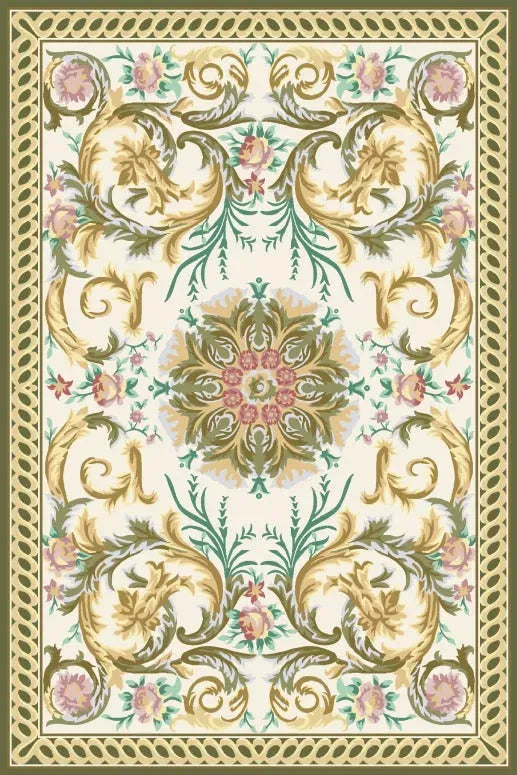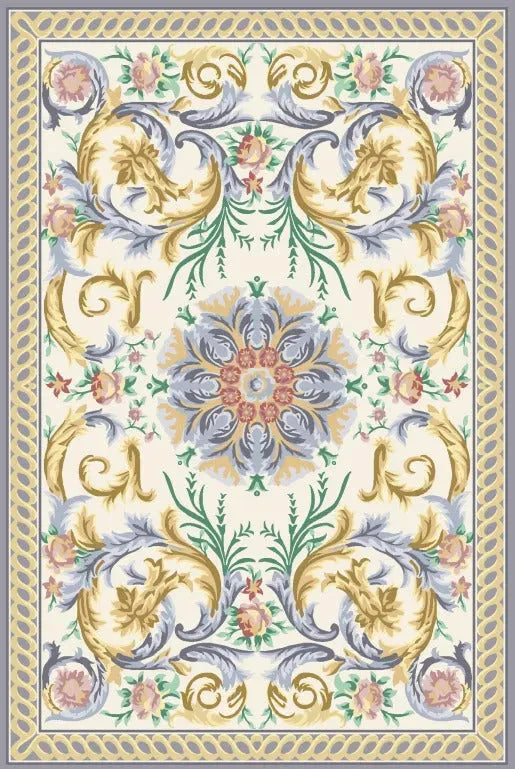
When you hear the words Persian carpet or Persian rug, you don’t just think of a floor covering. You think of elegance, heritage, and art woven into wool and silk. The history of Persian carpets is more than 2,500 years old, and their journey from the deserts of Persia to homes across the world is a tale of survival, beauty, and timeless design.
In this blog, let’s explore how the Persian carpet industry began, what their designs mean, and why people from every continent fell in love with them.

From Survival to the Birth of Persian Carpets
In ancient Persia, life was harsh. Winters were bitter, and the stone floors of homes were unbearably cold. The earliest Persian weavers, often women from nomadic tribes, began creating simple mats using wool from their sheep.
At first, these mats were practical — just a way to bring warmth and comfort. But Persians have always been known for their artistic soul. Slowly, geometric shapes, flowers, and tribal patterns began appearing. Each design carried meaning, turning simple rugs into cultural treasures.
This was the beginning of the Persian carpet industry — not as business, but as a way of life.
The Legend of the First Persian Carpet
Among Persia’s oldest legends is the tale of a shepherd’s daughter who longed to preserve the beauty of her garden. Every year, she watched blossoms bloom in spring only to vanish in summer’s heat.
One night, the mythical bird Simurgh appeared in her dream. Its feathers carried the colors of dawn, dusk, and midnight. The Simurgh whispered:
“Take the wool of your sheep. Take the colors of the earth, plants, and sky. Weave them together. What fades in nature will live forever in your hands.”
When she awoke, the girl began weaving. She dyed wool with saffron for yellow, indigo for blue, and madder root for red. From her loom came the first carpet — a garden that never faded.
When the Shah saw it, he declared:
“This is no rug. This is paradise woven by mortal hands.”
And so began the Persian tradition of weaving paradise into every carpet.
Symbolism in Persian Carpet Designs
What makes Persian rugs unique is not just their beauty but the meaning behind every symbol:
-
Cypress Tree – eternal life and resilience
-
Pomegranate – fertility, abundance, and family
-
Stars and Geometric Motifs – balance of the universe
-
Flowers and Gardens – the Persian vision of paradise on earth
This is why Persian carpets are often called “poetry in wool”. Every knot tells a story, every design carries a prayer, and every carpet is a universe of meaning.
How the World Fell in Love With Persian Carpets
Persian carpets became famous through Silk Road trade. Merchants carried them to India, the Ottoman Empire, and Europe. Venetian traders introduced them to wealthy European families, while emperors in India and sultans in Istanbul decorated their palaces with them.
By the 16th century, Persian carpets were not just household items — they were symbols of luxury, culture, and sophistication. Owning one meant owning a piece of Persian identity and refinement.
Even today, museums in London, Paris, and New York showcase antique Persian rugs as masterpieces of art history.
Why Persian Carpets Still Inspire the World
The most remarkable thing about Persian carpets is how their designs resonate with people across continents. A flower in a Persian design might remind you of your own garden. A hunting motif might echo your ancestors’ traditions. The stars woven into them are the same stars we all look up to.
That is why, from Asia to Europe, Africa to the Americas, Persian designs never feel foreign. They feel universal.
👉 Looking for inspiration? Discover our hand-picked Persian-inspired rugs perfect for modern interiors.
The Persian Carpet Legacy Today
Even in the modern world, Persian carpets remain unmatched. Whether hand-knotted in cities like Tabriz, Isfahan, and Kashan, or woven by tribal families, each rug is a continuation of a centuries-old tradition.
They are not just carpets. They are stories woven into wool, whispers of ancient Persia, and timeless works of art.
👉 If you want to see how Persian-inspired designs live on today, explore our luxury carpets and rugs collection.